Accompanies Lesson: 2
Objectives
Students will:
- Recognize that there are different levels of severity of illness and injury
- recognize that different levels of severity of illness or injury should prompt different types of responses
Teacher Notes
Calling 911 or an ambulance is a response that should be used only when serious illness or injury symptoms are experienced. Explore the balance between unnecessary calls and important calls to 911 or for an ambulance. Be sure students feel that it is appropriate for them, personally to call for this response when necessary. “Practice specific calling steps using a disconnected phone and/ or roleplay.
Teaching Questions
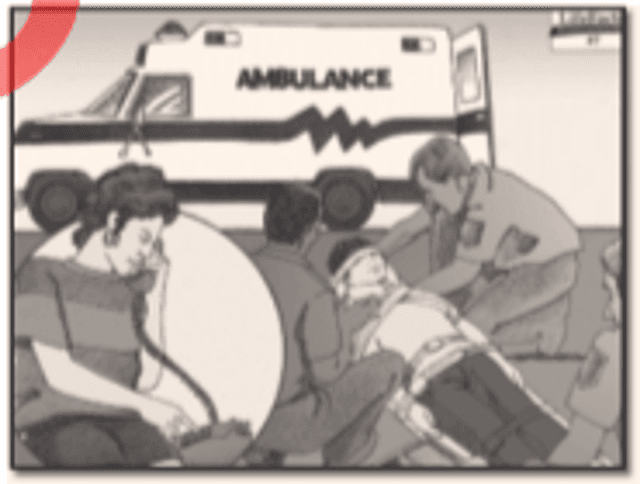
What is happening in this picture? The ill or injured person (or a friend) is calling 911 (calling for an ambulance). What is an ambulance? What is an emergency?
When should a person call 911 or an ambulance? If a person is feeling extremely bad (fin extreme pain, unconscious), can’t reach their doctor, is very worried about their illness or injury, and is too weak to travel with a friend to the emergency room, they should call 911 or an ambulance to have medical help come to them (wherever they are, any time of day or night).
What happens when a person calls 911 or an ambulance?
- A switchboard operator (the person who answers the phone) will ask what is wrong and what kind of help is needed. They will also want to know the address where the sick or injured person is, so the ambulance will know where to go.
- The person should try to stay calm until the medical help arrives. Usually, it will not take very long (2-15 minutes) from the time the phone call is made until the medical help arrives.
- The medical help will want to know what has happened, what is wrong. They will examine the person quickly, may give them some type of treatment, and it is needed (necessary), they will take the person to the hospital emergency room where the doctor can take care of them.
Life Assessment
Ask: What is happening here? When is it appropriate to call 911 or call for an ambulance?