Accompanies Lesson: 11
Objectives
Students will:
- Identify strategies for dealing with seizures, chest pain, poisoning, and choking
- Understand when to seek medical help for seizures, chest pain, poisoning, and choking
- Identify preventive strategies for handling seizures, chest pain, poisoning, and choking
Teacher Notes
The teaching about seizures assumes that students with a previously diagnosed seizure disorder will be known to you. You may even wish to invite them to help with the teaching of this lesson, describing self-care strategies and help they appreciate during a seizure. Be sensitive to any reluctance to discuss this topic, however, don’t force students to discuss their private issues in a public forum. Any grand mal seizure occurring for the first time (for that person) should be responded to by calling 911l or an ambulance or going to the ER right away. Careful monitoring of seizure control medications is also an important discussion topic if it affects your students.
Teaching Questions
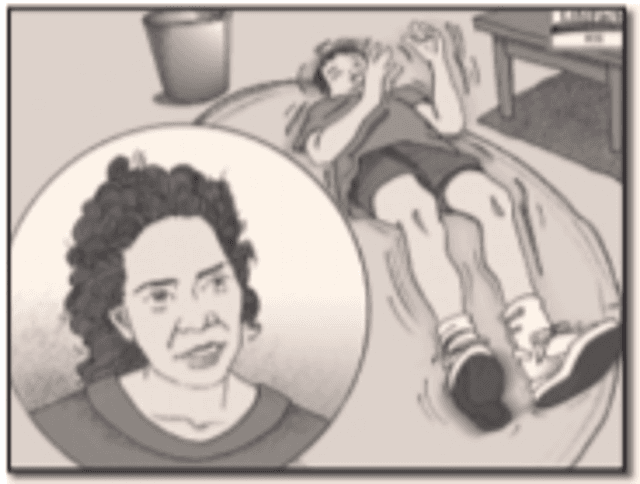
What is happening to the people in the picture? Patsy, the girl who is staring strangely is having a petit mal (absence) seizure. Matt, the boy lying on the floor, is having a grand mal seizure. There are different kinds of seizures. Petit mal seizures are shorter and less severe types of seizures. Grand mal seizures are more severe and involve uncontrollable convulsions (jerking of parts of the body)
What should the friends of the person having a grand mal seizure do to help? They should make sure the person doesn’t injure himself by hitting or bumping into sharp objects during the seizure. What else could they do? If this is the first seizure the person has ever had, they should get emergency medical help right away – call 911 or call for an ambulance to take the person to the Emergency Room.
What can people do who have seizure disorders to help prevent seizures? They can take seizure control medications prescribed by a doctor.
LifeFacts Assessment
Ask: What is happening in this picture? What could other people do to help?